



The economist behind the chair
Sanjaya Lall spent four decades at Oxford asking why some countries learn to make things the world wants — and insisting, against the current of his profession, that the answer lay in capabilities deliberately built, not advantages passively received.
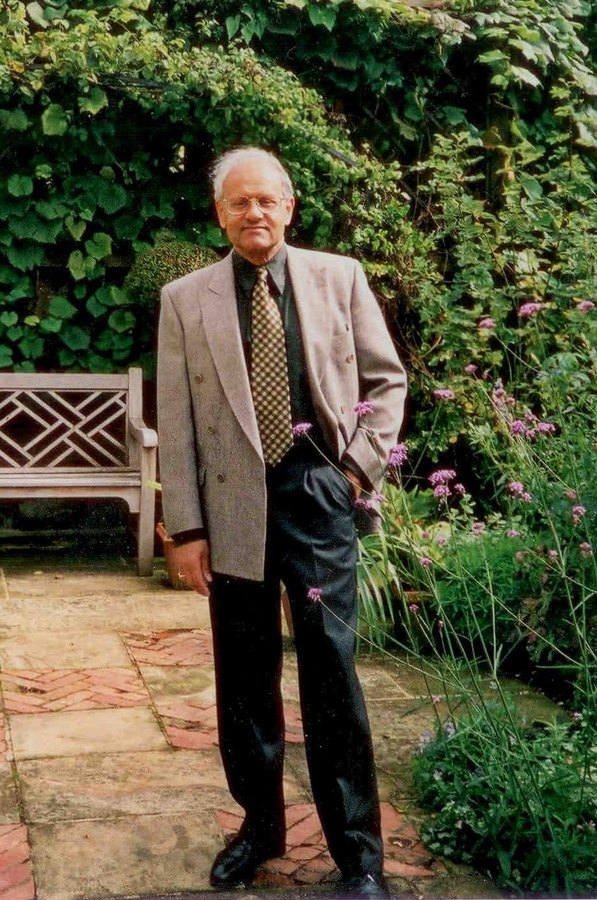
From Patna to Queen Elizabeth House
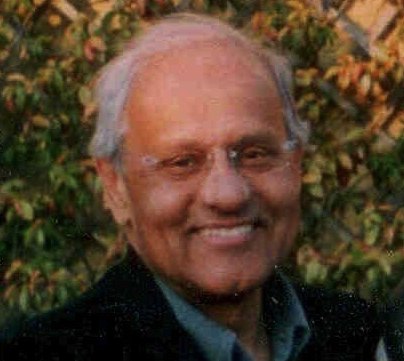
Sanjaya Lall was born in Patna, in the Indian state of Bihar, on 13 December 1940, a grandson of the historian K. P. Jayaswal. Academic distinction came early and never left: a gold medal for ranking first in his BA at Patna University in 1960; a first in Philosophy, Politics and Economics at St John's College, Oxford, in 1963, with the college prize; a distinction in the Oxford MPhil in economics in 1965.
He went straight from the MPhil to the World Bank as an economist, returning to Oxford in 1968. Apart from a second Washington stint in the 1980s, Oxford remained his home for the rest of his life: research officer at the Institute of Economics and Statistics, University Lecturer in Development Economics at Queen Elizabeth House, Fellow of Green College from 1982, course director of Development Studies, a founding editor of Oxford Development Studies, and from 1999 Professor of Development Economics. For Lall, development economics was never primarily the study of poverty: it was the study of how poor countries build the industrial, technical, and organisational capabilities to compete — and everything he did followed from that definition of the problem.
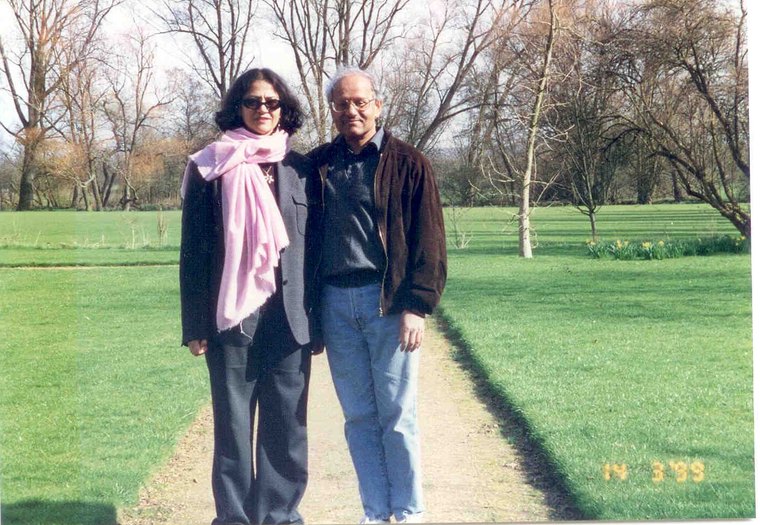

The output was prodigious — more than thirty books, some seventy-five refereed journal articles, over seventy book chapters, and dozens of reports for governments and international agencies. Few economists of his generation were as deeply engaged in practice: he advised the World Bank, the OECD, the ILO, UNICEF, the European Commission, and the Commonwealth Secretariat, and served as principal consultant to UNCTAD's World Investment Report and to UNIDO's Industrial Development Report. Yet he refused every offer to join these organisations permanently, insisting on the independence to tell them what the evidence said rather than what they wished to hear — it was the influence the work might carry, he would say, not the organisation, that mattered. Two intellectual debts shaped the work: Paul Streeten, his early mentor and collaborator at Oxford, and — at a distance — Nicholas Kaldor, whose conviction that manufacturing is the engine of growth runs through everything Lall wrote.

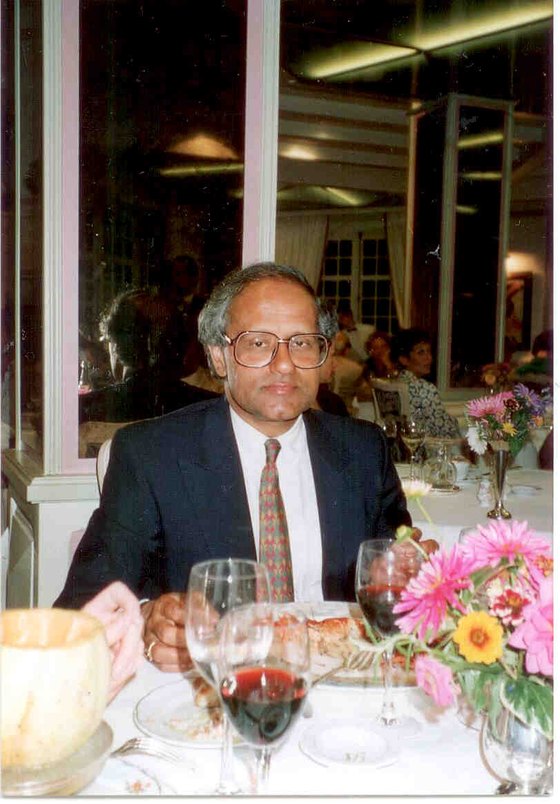
Multinationals, seen from the South
Lall's first mark on the discipline came in the early 1970s, with pioneering empirical studies of transfer pricing by multinational firms. Working with evidence from the pharmaceutical industry, he showed how corporations could use the prices charged on transactions between their own subsidiaries to move profits quietly out of developing host countries — a practice largely invisible to the tax authorities of the day. Half a century later, when the taxation of multinational profit-shifting commands G20 summits, the work reads as remarkably far ahead of its time.
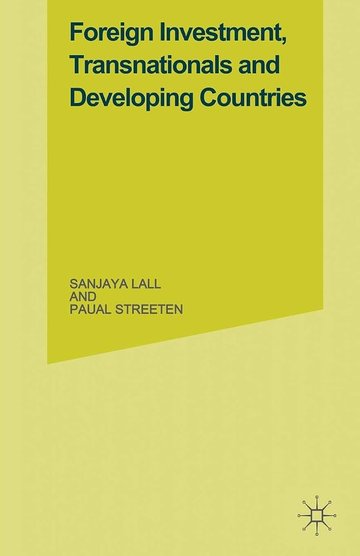
The transfer-pricing findings fed a larger project, pursued in part with Streeten: an unsentimental accounting of what foreign direct investment actually does for development. Foreign Investment, Transnationals and Developing Countries (1977) took a deliberately evidence-first path between the two camps of its era. At a time when much of development economics saw multinationals only as instruments of dependency, and much of mainstream economics saw them only as carriers of capital and know-how, Lall and Streeten showed that the benefits were real but conditional — on the host country's bargaining position, its policies, and above all its capacity to absorb what the foreign firm brought. Much of Lall's later work sharpened the point into operational questions: under what circumstances do foreign affiliates form productive linkages with local firms, and how can host economies avoid having their own enterprise crowded out?
The essays collected in The Multinational Corporation (1980), Developing Countries in the International Economy (1981), and Multinationals, Technology and Exports (1985) extended the account. And from his abiding fascination with India came a genuinely new field: with Developing Countries as Exporters of Technology (1982) and The New Multinationals (1983), Lall was among the first economists to study Third World multinationals — developing-country firms investing abroad and selling technology. When he began, the Fortune 500 contained barely a handful of developing-country firms; it now contains scores. He was writing decades before the rise of the great emerging-market corporations made the phenomenon impossible to ignore.

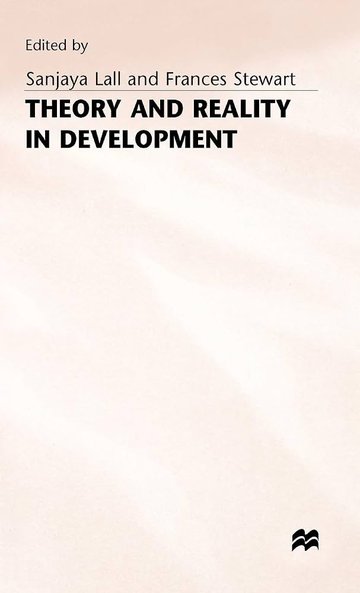
The debt to Streeten was repaid in kind: with Frances Stewart, Lall edited Theory and Reality in Development (1986), a volume of essays in his mentor's honour — a form of tribute that, in time, would be paid to Lall himself.
How countries learn: technological capability
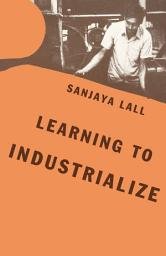
The idea for which Lall is best remembered grew out of a dissatisfaction. Economic theory treated technology as a black box — a blueprint that, once purchased or imported, worked anywhere. Lall's fieldwork told him otherwise. Mastering a technology, he argued, is itself a costly, risky, skill-intensive process: firms do not simply receive technology; they must learn it, adapt it, and build the engineering, organisational, and managerial competence to use and improve it.
Learning to Industrialize (1987) traced that acquisition of capability through detailed studies of Indian firms. The framework was generalised in "Technological Capabilities and Industrialization" (World Development, 1992), which remains his most cited paper and a foundational text of the field. It distinguished the capabilities needed to invest, to produce, and to link with other firms; showed how they interact with a country's incentives, factor markets, and institutions; and explained why national technological development is cumulative and path-dependent — why, in short, countries that look similar on paper industrialise so differently in practice.
The approach placed Lall in a distinguished lineage running from Marshall through Rosenstein-Rodan and Scitovsky — thinkers who refused to reduce technical change to a term in a production function. He was among the earliest to reject the then-standard practice of estimating technology spillovers through aggregate production functions, insisting that learning had to be observed where it happens, inside firms, as they fight their way from competing on price to competing on products. And it gave development policy a new object: if capability is built rather than bestowed, then the interesting question is what builds it.
Creating winners: the industrial policy debate
The answer, Lall argued, was visible in East Asia — if one was willing to look at what its governments had actually done. Through the 1990s, as the Washington consensus hardened around the view that openness alone would deliver technology and growth, Lall assembled the counter-evidence. His 1994 critique of the World Bank's East Asian Miracle report, and the studies gathered in Learning from the Asian Tigers (1996), made the case that Korea, Taiwan, and their neighbours had not merely "picked" industrial winners: they had deliberately created them, using selective, disciplined intervention to overcome the market failures that beset costly, uncertain technological learning.
This was not a licence for protectionism, and Lall was scathing about import-substitution regimes that sheltered firms from any pressure to learn. The East Asian lesson, in his telling, was the pairing of support with export discipline — help that had to be earned in world markets — and of intervention with the steady construction of skills, infrastructure, and institutions. He called such measures "market-stimulating" technology policies: the state's role was not to replace markets but to make them work for learning.
He defended the position against formidable opposition. When Paul Krugman famously dismissed competitiveness as a "dangerous obsession", Lall replied that for a developing country — permanently constrained by its balance of payments and the structure of what it can sell — competitiveness is neither dangerous nor an obsession, but the development problem itself. The argument was conducted, on both sides, with respect; there is a pleasing symmetry in the fact that Krugman would later hold the visiting chair that bears Lall's name.
Measuring competitiveness — and confronting the hardest cases
Characteristically, Lall wanted the argument to be settled by measurement rather than assertion. He built a classification of exports by technological level — resource-based, low-, medium-, and high-technology — that allowed the upgrading of a country's trade to be tracked over time, and used it to map the manufactured exports of the developing world. The classification is still in routine use across trade and development research. Because export structures are path-dependent and hard to change, he showed, what a country sells today shapes what it can become tomorrow.
The measurement work flowed directly into policy. Several of the indexes deployed in UNCTAD's World Investment Report were of his invention; the same instincts underpinned benchmarking exercises for the Commonwealth Secretariat — including Promoting Industrial Competitiveness in Developing Countries (1999) — and shaped UNIDO's Industrial Development Report and its Competitive Industrial Performance index, which continue to rank the world's economies in a frame Lall helped design.
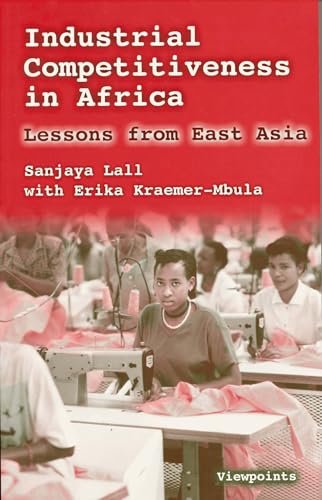
And he took the framework to the hardest cases. In Failing to Compete (2002, with Carlo Pietrobelli), he examined why the technology systems of Sub-Saharan Africa — the institutions that should connect firms, skills, finance, and knowledge — were failing to support industrial learning, and what liberalisation without capability-building had cost the region. Industrial Competitiveness in Africa (2005, with Erika Kraemer-Mbula, then his doctoral student) pressed the East Asian comparison: African economies were falling behind not for want of openness, but for want of the skills, technological effort, and FDI strategy that openness requires to pay off.
Throughout, the method was the same: patient assembly of firm-level and trade evidence, deployed without deference to any school. He went into the field for his data because he did not believe these questions could be settled from a desk, and he built teams of young researchers to gather it with him — many of whom went on to lead the field themselves. He made, as one tribute put it, no concession to the populists on one side or the neoliberals on the other — a stance that earned him devotion from his students and respect from practitioners as well as fellow scholars.
An unfinished argument, vindicated
Lall died on 18 June 2005, at sixty-four, at the height of his powers. His last major project appeared the following year: Understanding FDI-Assisted Economic Development (2006), edited with Rajneesh Narula, which returned to the question he had opened three decades earlier and asked whether the world needed a new agenda for foreign investment — one that judged FDI by the domestic capabilities it helps create rather than the capital it brings.
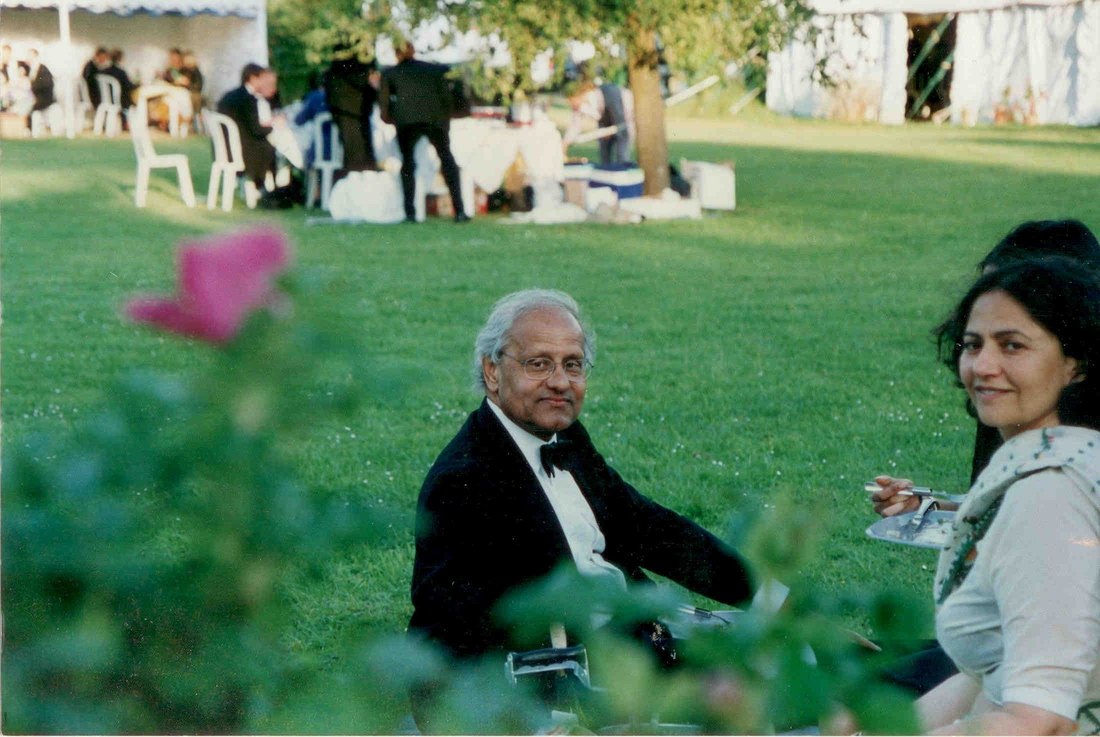
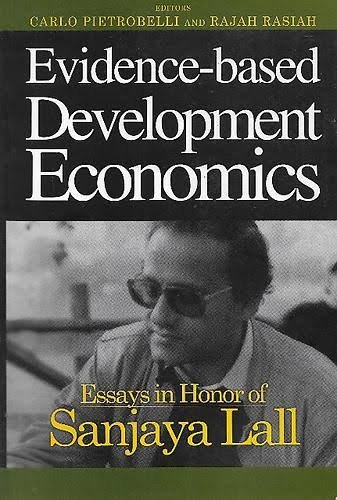
The tributes were immediate and have not stopped — and it is striking how much of them dwells not on the books but on the man: the gentleness and humility, the cheerful torrent of e-mails, the open door and the time given, without calculation, to young scholars from the countries he studied. He treated his students as colleagues, and they repaid him by becoming the field. Colleagues and former students produced Evidence-Based Development Economics (2012), a volume of essays in his honour whose title distils his method into three words. In 2011 the Sanjaya Lall Memorial Fund endowed the Visiting Professorship this Centre now hosts; the inaugural event drew over eight hundred people to hear Amartya Sen, Martin Wolf, and the chair's first holder, Robert Wade. In the years since it has become one of the most prestigious visiting appointments in economics, bringing Nobel laureates and Clark Medallists to Oxford each Trinity Term — among them Dani Rodrik, Paul Krugman, Esther Duflo, Joseph Stiglitz, and Daron Acemoglu — a good number of whom work on the questions of institutions, industrial policy, and technological change that he did much to open.
The clearest vindication, though, is the state of the argument itself. The propositions Lall defended when they were heresy — that technological capability is built by deliberate effort; that states can and do shape comparative advantage; that openness pays only where the capacity to learn exists — now sit at the centre of economic policy from Washington to Brussels to New Delhi, as governments rediscover industrial strategy for the age of semiconductors, green technology, and artificial intelligence. The questions the Centre for Technology and Society asks about emerging technologies are, in a direct line of descent, his questions — who builds the capability, who captures the gains, and what institutions and policies can widen both.