2011
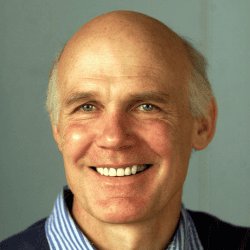
Robert Wade
London School of Economics

One of the most prestigious visiting appointments in economics, held by Nobel laureates and Clark Medallists, and awarded annually at Oxford since 2011.
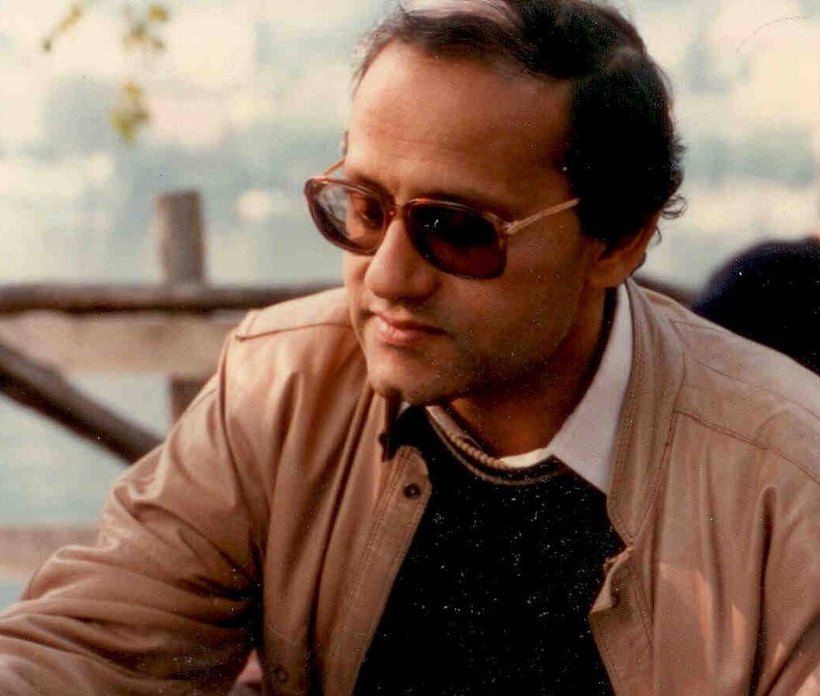
The Sanjaya Lall Visiting Professorship of Business and Development was created to honour the memory and academic legacy of Professor Sanjaya Lall (1940–2005), and has run for over a decade. It is funded by the Sanjaya Lall Memorial Fund, established in 2011, and administered by Oxford's Social Sciences Division.
Each year the University invites a world-leading academic in economics, business, or development, broadly defined, to join the Oxford community for Trinity Term. The appointment carries a public lecture and a panel discussion that regularly draw audiences in the hundreds.
In the spirit of Sanjaya Lall, holders are expected to show an ability to adapt theory to novel research questions and methods, alongside a flair for formulating strategic policy responses — a combination that maps closely onto the Centre's own research agenda.
The subjects have tracked whatever was most urgent in the world economy at the time, and lately that has meant technology. In 2026 Sendhil Mullainathan argued that economists are unusually well equipped to say what large language models can and cannot do, and joined Sir Nigel Shadbolt and Google DeepMind's Raia Hadsell on what algorithmic systems are doing to science itself. In 2024 Daron Acemoglu challenged the ‘productivity bandwagon’ — the assumption that technological advance brings shared prosperity of its own accord — and debated the future of work with Sir Christopher Pissarides and Helen Margetts.
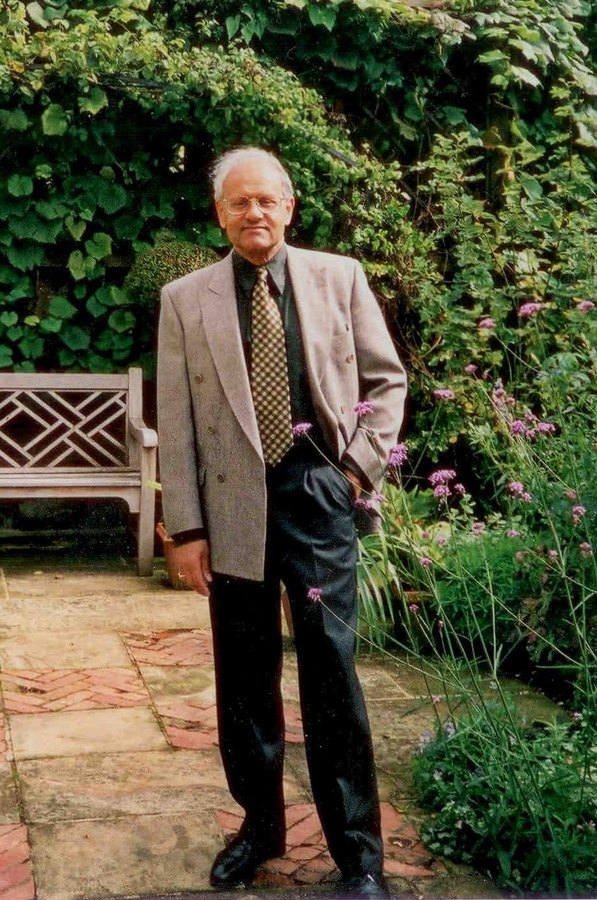
Sanjaya Lall was one of the world's pre-eminent development economists. Over a forty-year career at Oxford he conducted pioneering research on the impact of foreign direct investment, the economics of multinational corporations, and the emergence of technological capability and industrial competitiveness in the developing world.
He was a founding editor of Oxford Development Studies, served as Professor of Development Economics from 1999, and advised the World Bank, UNCTAD, UNIDO, the OECD, and the European Commission. He argued, against the prevailing view of his day, that technological capability is built deliberately rather than acquired automatically through open markets.
That argument — that the distribution of technological capability is a matter of institutions and policy, not of nature — is the intellectual thread connecting his work to the Centre's.
The Professorship has brought some of the most influential economists of the past half-century to Oxford.
2011
Robert Wade
London School of Economics
2013
Dani Rodrik
Harvard University
2014
Paul Krugman
Princeton University
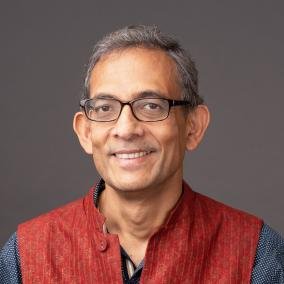
2015
Abhijit Banerjee
Massachusetts Institute of Technology
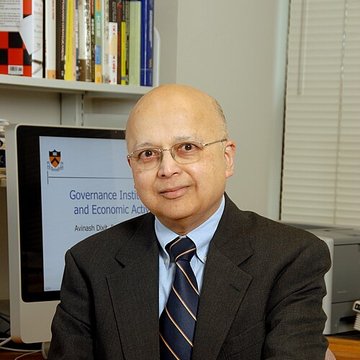
2016
Avinash Dixit
Princeton University
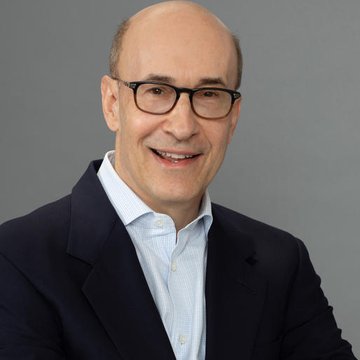
2017
Kenneth Rogoff
Harvard University
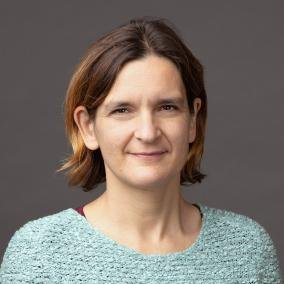
2018
Esther Duflo
Massachusetts Institute of Technology
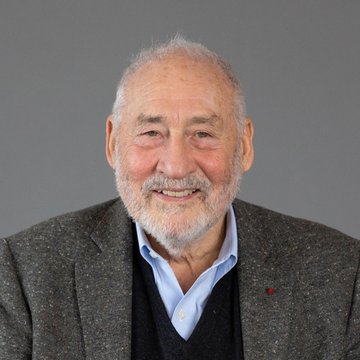
2023
Joseph Stiglitz
Columbia University
2023
Raj Chetty
Harvard University
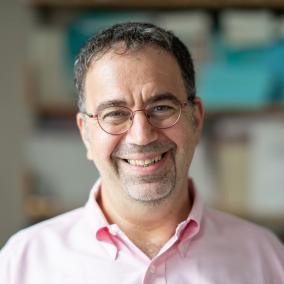
2024
Daron Acemoglu
Massachusetts Institute of Technology
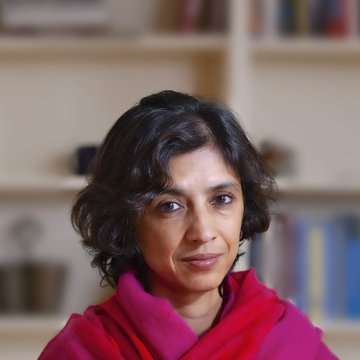
2025
Rohini Pande
Yale University
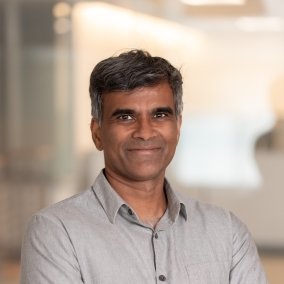
2026
Sendhil Mullainathan
Massachusetts Institute of Technology
Six holders have won the Nobel Memorial Prize in Economic Sciences or the John Bates Clark Medal.
Each Professorship brings a public lecture and a panel discussion, organised by the Sanjaya Lall Memorial Fund, that regularly draw audiences in the hundreds. A selection from the archive, most recent first.
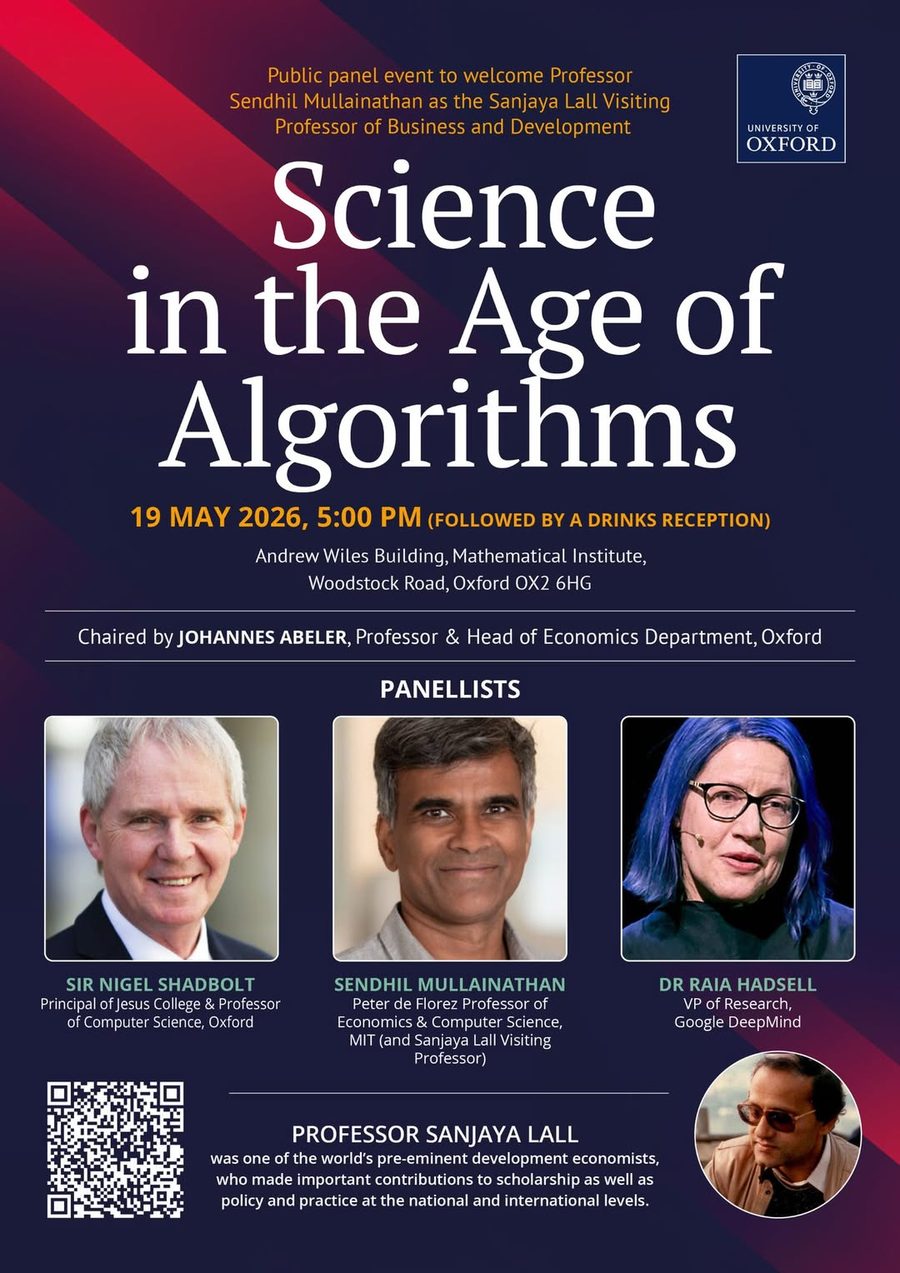
Peter de Florez Professor of Economics and Computer Science, MIT
A public panel welcoming Professor Mullainathan as Sanjaya Lall Visiting Professor of Business and Development, on what algorithmic systems are doing to the practice of science itself.
Speakers Sir Nigel Shadbolt (Principal of Jesus College and Professor of Computer Science, Oxford), Sendhil Mullainathan (MIT), and Dr Raia Hadsell (VP of Research, Google DeepMind). Chaired by Professor Johannes Abeler, Head of the Department of Economics.
Venue Andrew Wiles Building, Mathematical Institute · 5.00pm, followed by a drinks reception
What large language models can and cannot do is usually treated as a question for computer scientists. Mullainathan argues that economists are uniquely equipped to answer it.
Speakers Sendhil Mullainathan (MIT)
Venue Lecture Theatre, Manor Road Building · 5.00–6.30pm, followed by a drinks reception
Henry J. Heinz II Professor of Economics and Director of the Economic Growth Center, Yale University
Delivered during Professor Pande's Trinity Term visit. Her research examines how institutions shape economic, political, and environmental inequality in low- and middle-income countries.
Speakers Rohini Pande (Yale University), an alumna of the Oxford PPE programme
Venue University of Oxford · Hosted by the Department of Economics
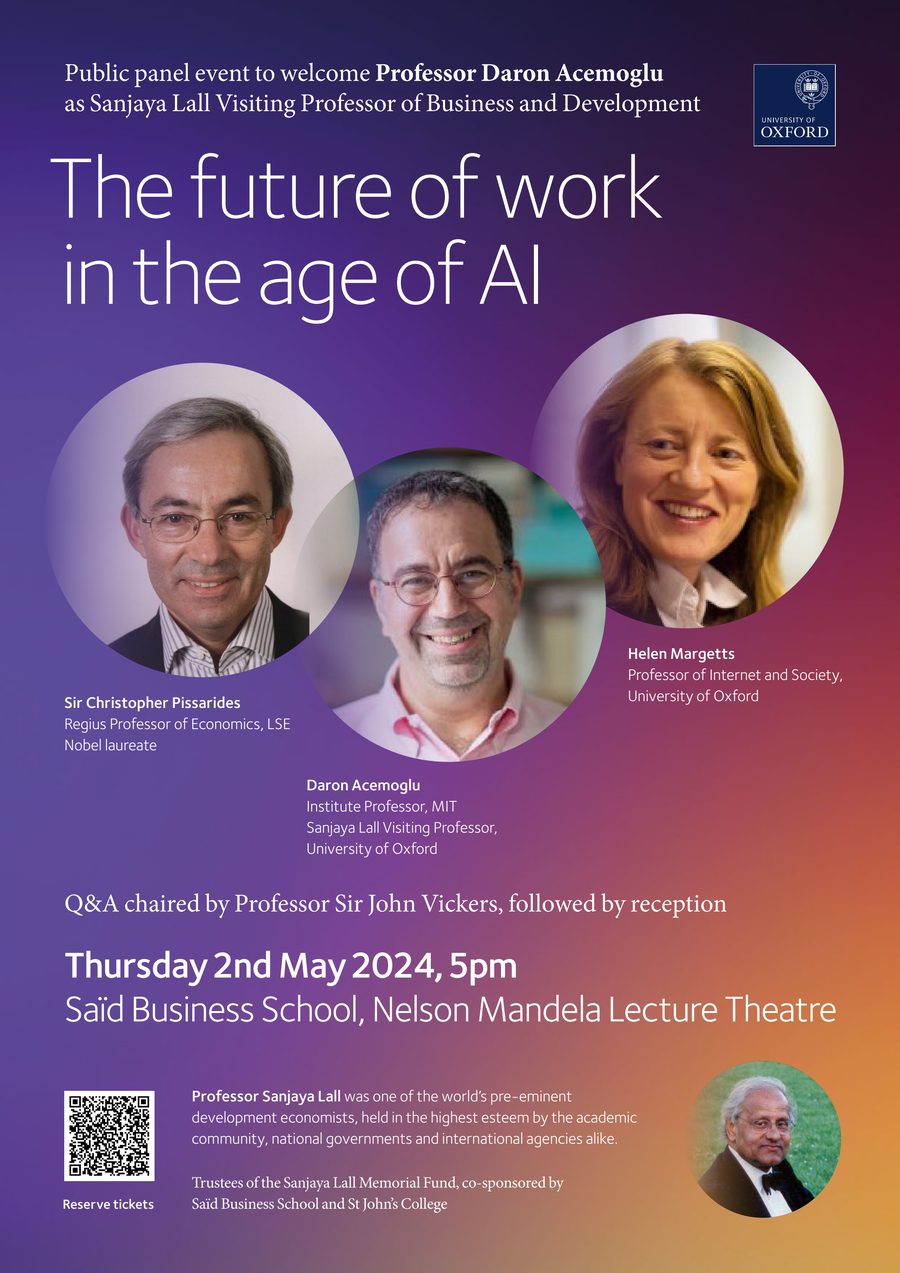
Institute Professor, Massachusetts Institute of Technology
A public panel on what artificial intelligence means for employment, wages, and the organisation of work — the question closest to the CTS research agenda.
Speakers Sir Christopher Pissarides (Regius Professor of Economics, LSE, and Nobel laureate), Daron Acemoglu (MIT), and Helen Margetts (Professor of Internet and Society, Oxford). Q&A chaired by Professor Sir John Vickers.
Venue Nelson Mandela Lecture Theatre, Saïd Business School · 5.00pm, followed by a reception. Co-sponsored by Saïd Business School and St John's College
Drawing on Power and Progress, Acemoglu challenged the idea that technological advance leads naturally to greater prosperity — what he calls the 'productivity bandwagon' — arguing that who benefits depends on institutions and choices rather than on technology itself.
Speakers Daron Acemoglu (Institute Professor, MIT)
Venue University of Oxford · Hosted by the Saïd Business School
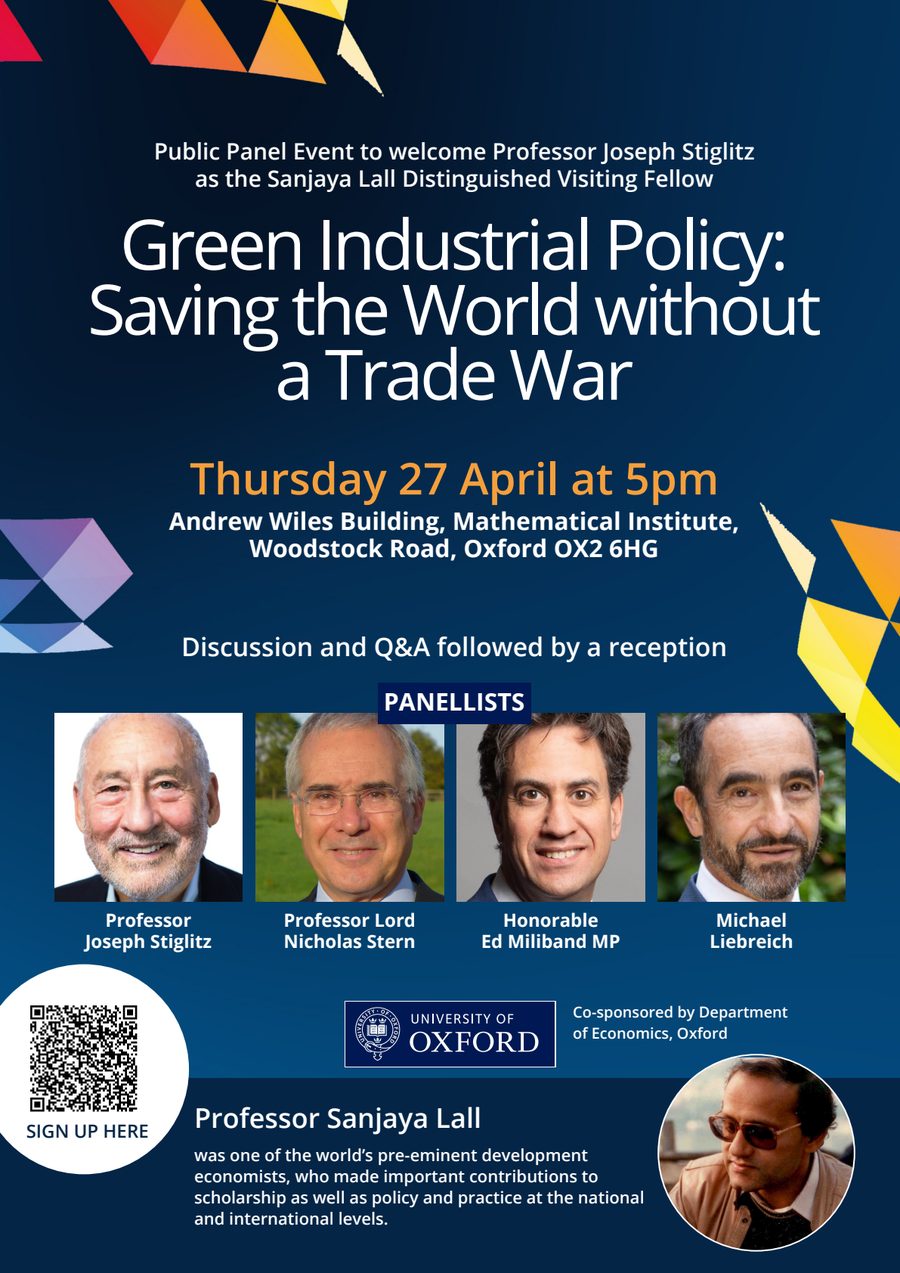
Columbia University · Harvard University
A public panel welcoming Professor Stiglitz as Sanjaya Lall Distinguished Visiting Fellow, on whether decarbonisation and open trade can be reconciled.
Speakers Joseph Stiglitz (Columbia), Professor Lord Nicholas Stern, the Hon. Ed Miliband MP, and Michael Liebreich.
Venue Andrew Wiles Building, Mathematical Institute · 5.00pm, discussion and Q&A followed by a reception. Co-sponsored by the Department of Economics
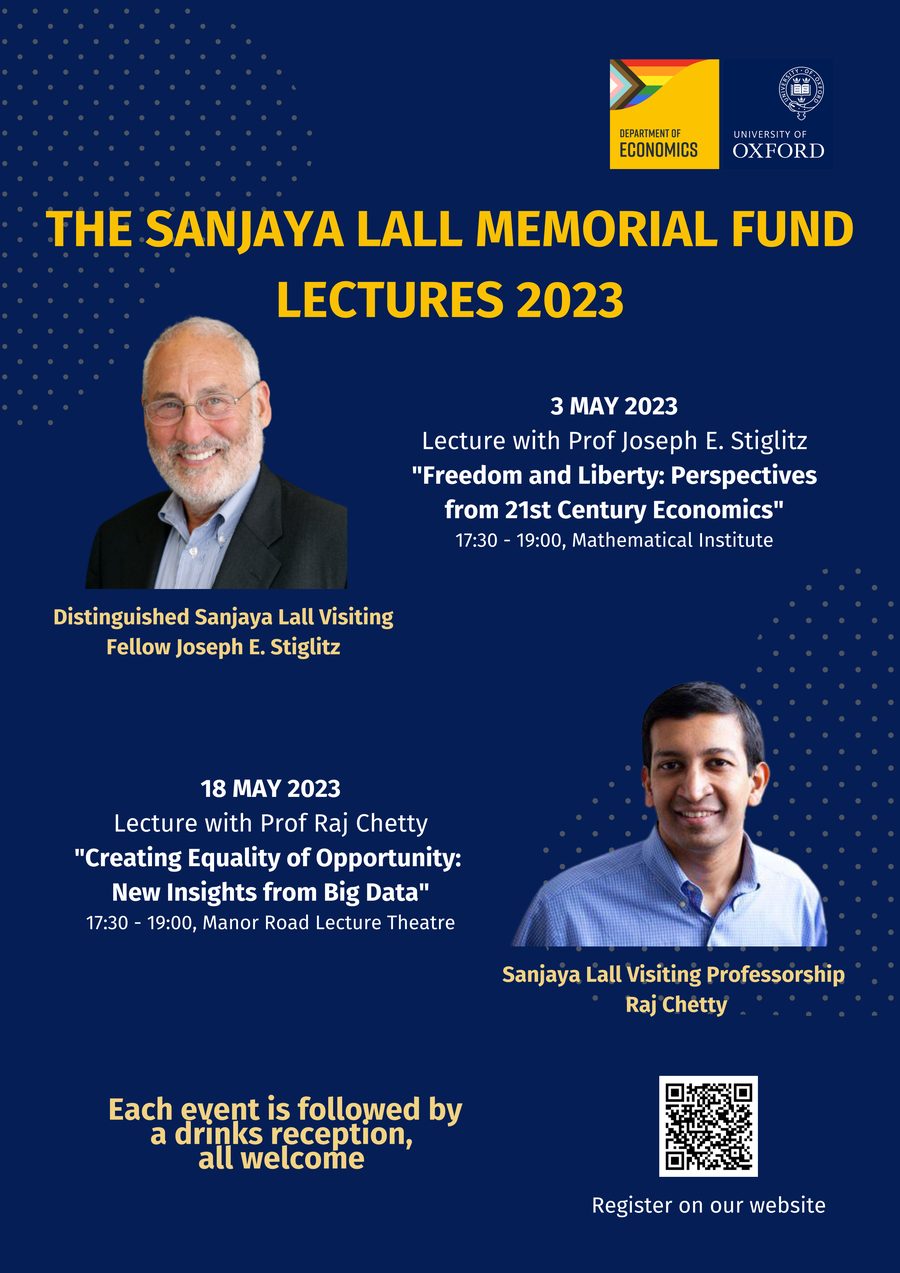
The Sanjaya Lall Memorial Fund Lecture 2023, revisiting the concept of freedom through the lens of contemporary economics.
Speakers Joseph Stiglitz (Columbia University), recipient of the 2001 Nobel Memorial Prize in Economic Sciences
Venue Mathematical Institute · 5.30–7.00pm. Hosted by the Department of Economics
On what administrative and social-network data reveal about why children's chances of upward mobility vary so sharply across neighbourhoods.
Speakers Raj Chetty (William A. Ackman Professor of Economics, Harvard, and Director of Opportunity Insights), with Joseph Stiglitz as discussant
Venue Manor Road Lecture Theatre · 5.30–7.00pm. Hosted by the Department of Economics
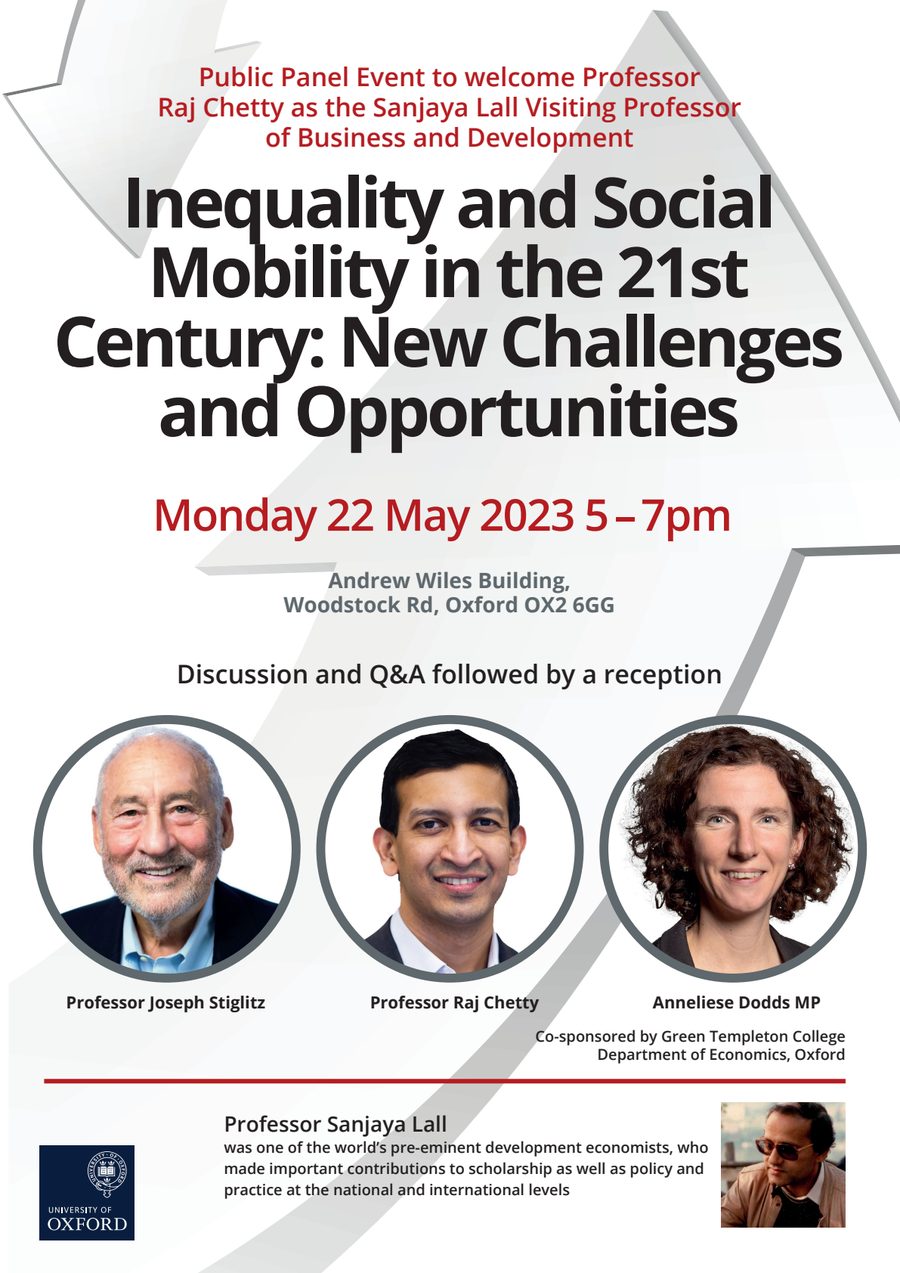
A public panel welcoming Professor Chetty as Sanjaya Lall Visiting Professor of Business and Development.
Speakers Joseph Stiglitz (Columbia), Raj Chetty (Harvard), and Anneliese Dodds MP.
Venue Andrew Wiles Building · 5.00–7.00pm, discussion and Q&A followed by a reception. Co-sponsored by Green Templeton College and the Department of Economics
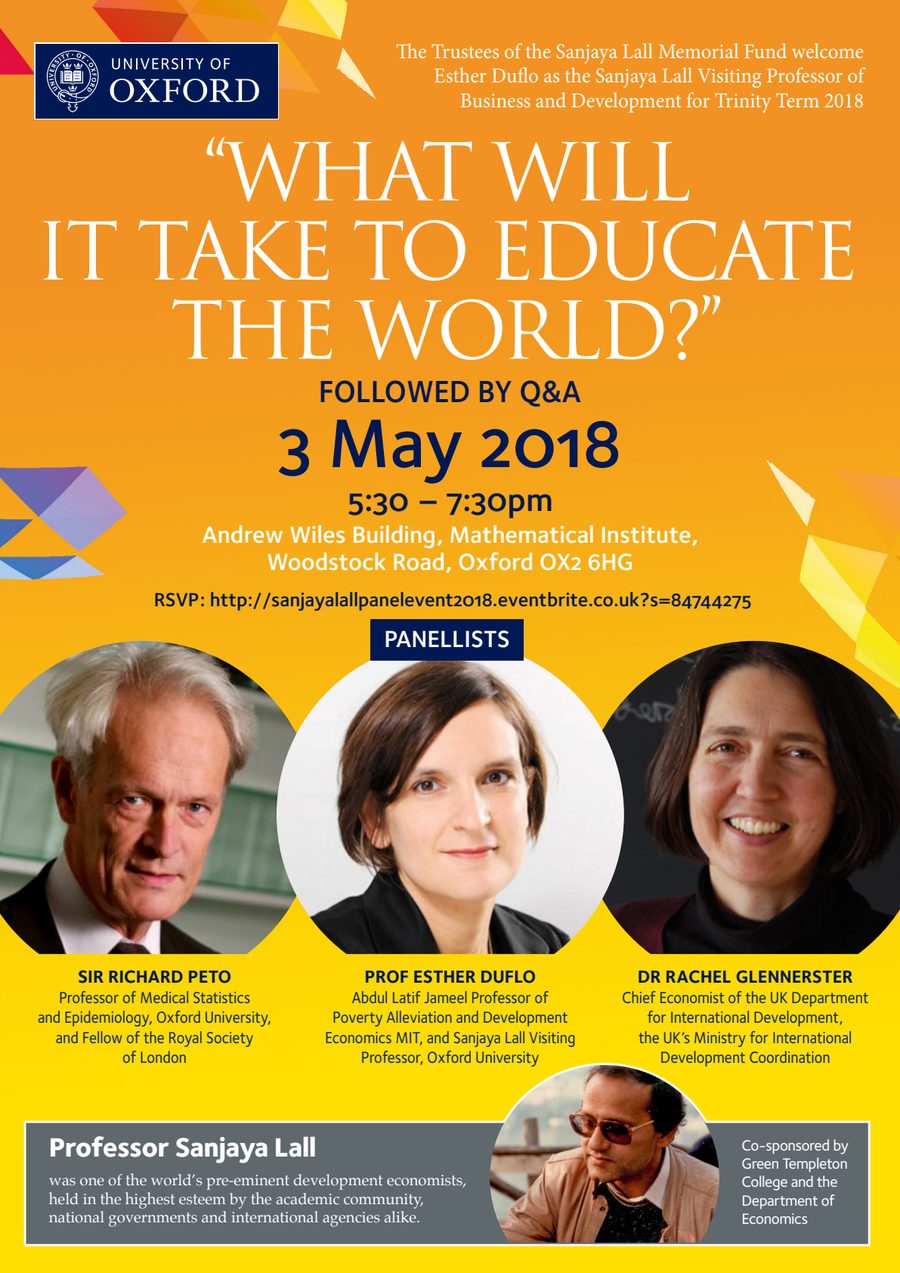
Abdul Latif Jameel Professor of Poverty Alleviation and Development Economics, MIT
Duflo drew on research into school learning techniques in rural India that bridges economics with psychology and cognitive science; the panellists responded from their own experience of large-scale policy interventions.
Speakers Sir Richard Peto (Professor of Medical Statistics and Epidemiology, Oxford), Esther Duflo (MIT), and Dr Rachel Glennerster (Chief Economist, UK Department for International Development).
Venue Andrew Wiles Building, Mathematical Institute · 5.30–7.30pm. Co-sponsored by Green Templeton College and the Department of Economics
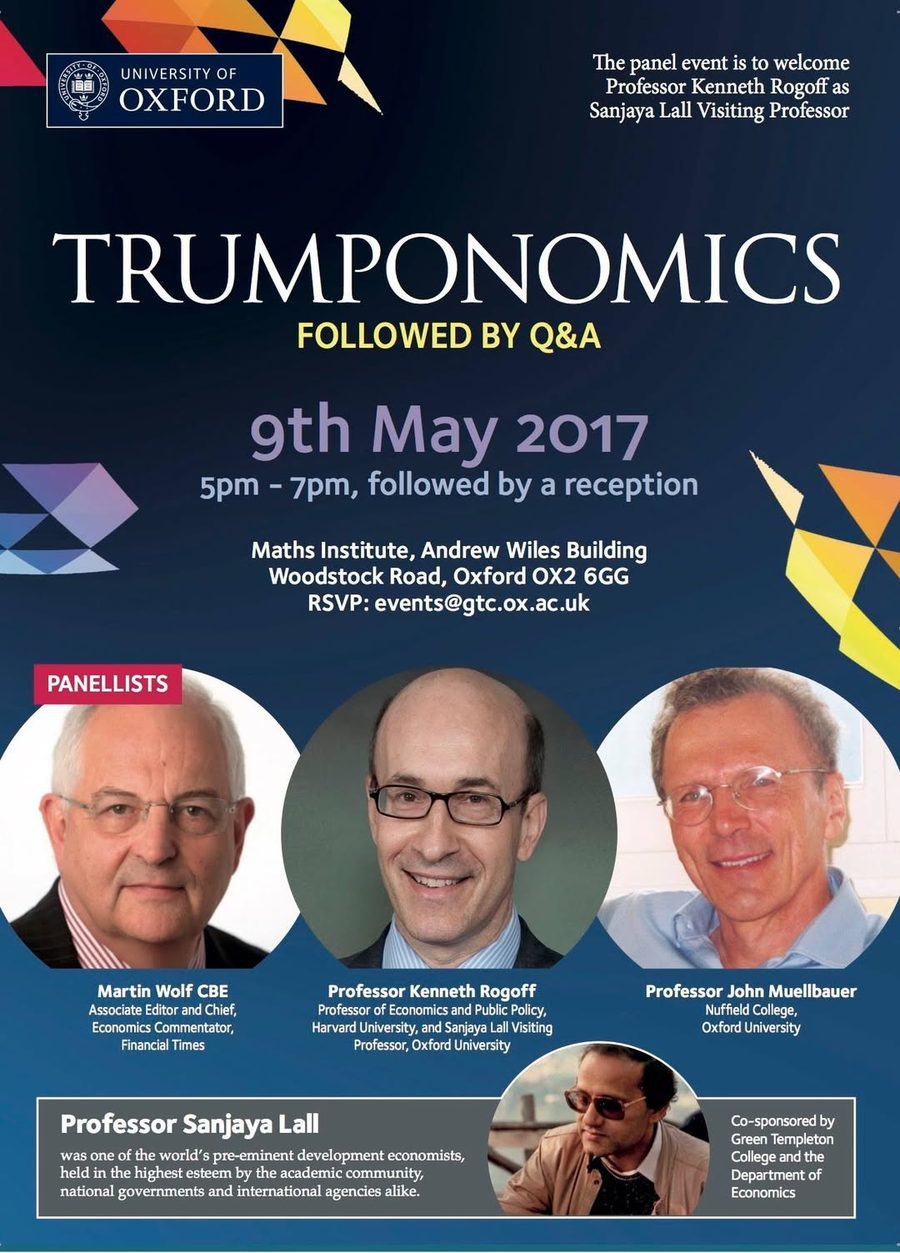
Thomas D. Cabot Professor of Public Policy and Professor of Economics, Harvard University
A public panel welcoming Professor Rogoff as Sanjaya Lall Visiting Professor, assessing the economic programme of the first Trump administration a few months into its term.
Speakers Martin Wolf CBE (Associate Editor and Chief Economics Commentator, Financial Times), Kenneth Rogoff (Professor of Economics and Public Policy, Harvard), and Professor John Muellbauer (Nuffield College, Oxford).
Venue Andrew Wiles Building, Mathematical Institute · 5.00–7.00pm, followed by a reception. Co-sponsored by Green Templeton College and the Department of Economics
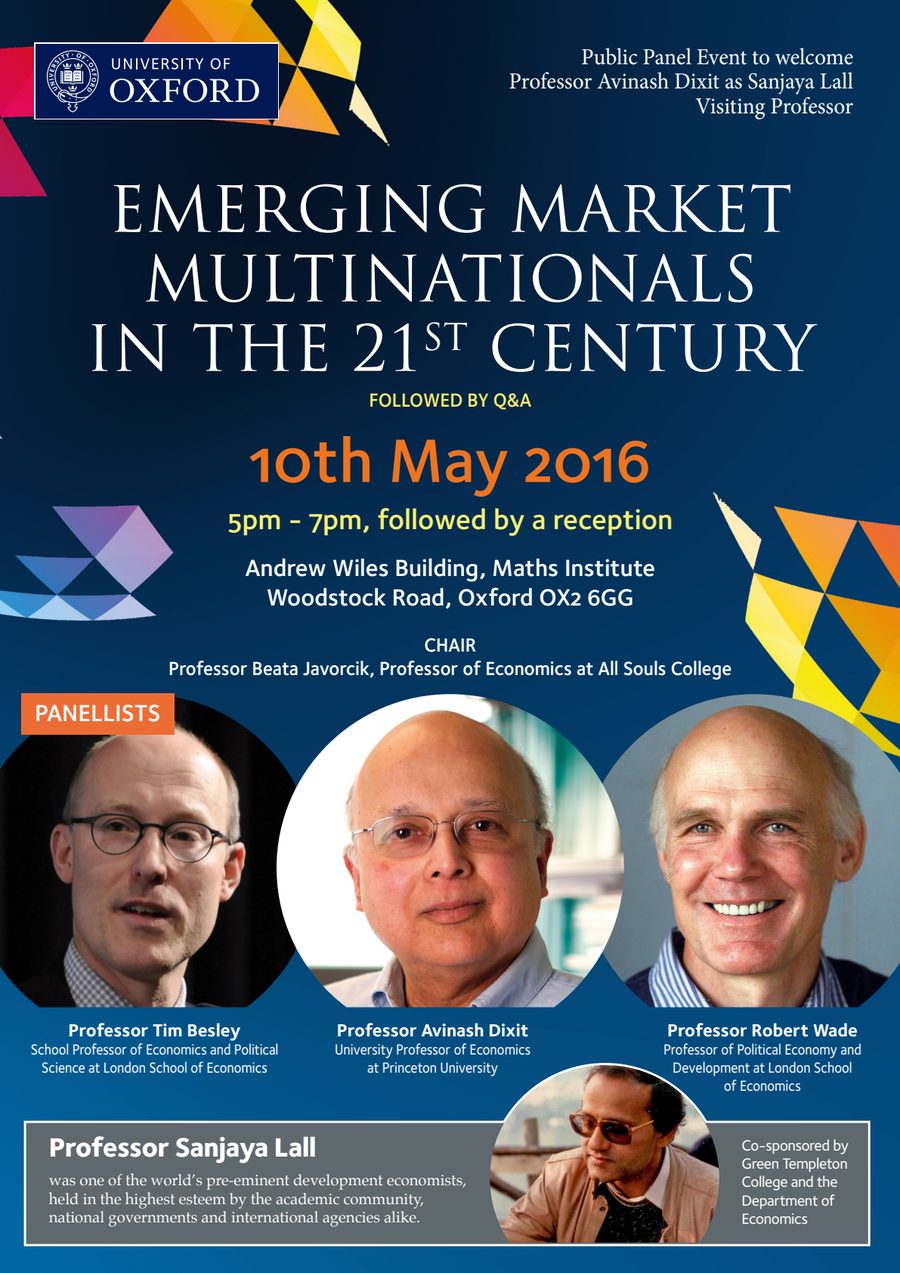
University Professor of Economics, Princeton University
A public panel welcoming Professor Dixit as Sanjaya Lall Visiting Professor, on the rise of firms from developing economies as global multinationals — a subject at the centre of Sanjaya Lall's own research.
Speakers Professor Tim Besley (School Professor of Economics and Political Science, LSE), Avinash Dixit (Princeton), and Professor Robert Wade (Professor of Political Economy and Development, LSE, and the first holder of the Professorship). Chaired by Professor Beata Javorcik, All Souls College.
Venue Andrew Wiles Building, Mathematical Institute · 5.00–7.00pm, followed by a reception. Co-sponsored by Green Templeton College and the Department of Economics
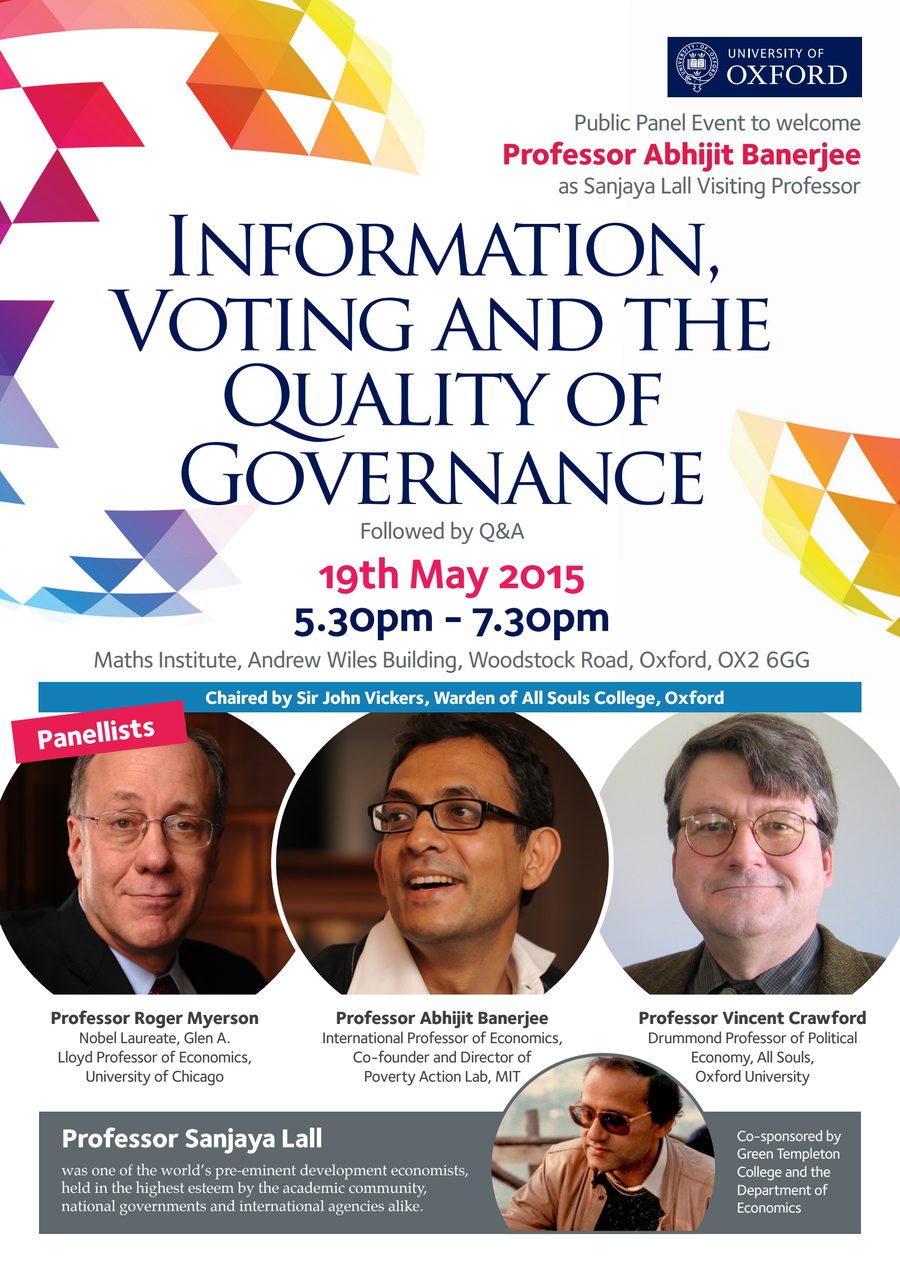
Ford International Professor of Economics, MIT
On what voters know, how that shapes electoral accountability, and what it implies for the quality of government in developing democracies.
Speakers Professor Roger Myerson (Glen A. Lloyd Professor of Economics, Chicago, and Nobel laureate), Abhijit Banerjee (MIT, co-founder and director of the Poverty Action Lab), and Professor Vincent Crawford (Drummond Professor of Political Economy, All Souls, Oxford). Chaired by Sir John Vickers, Warden of All Souls College.
Venue Andrew Wiles Building, Mathematical Institute · 5.30–7.30pm. Co-sponsored by Green Templeton College and the Department of Economics
A panel organised by the Sanjaya Lall Memorial Fund, held a week after the 2015 general election, on the economic choices facing the incoming government. Krugman returned to Oxford the year after holding the Visiting Professorship.
Speakers Paul Krugman (Princeton University), Professor Sir David Hendry (University of Oxford), and Martin Wolf CBE (Chief Economics Commentator, Financial Times). Chaired by Professor Anthony Venables CBE.
Venue Saïd Business School, University of Oxford · Organised by the Sanjaya Lall Memorial Fund and hosted by Oxford Saïd as part of its Distinguished Speaker Series
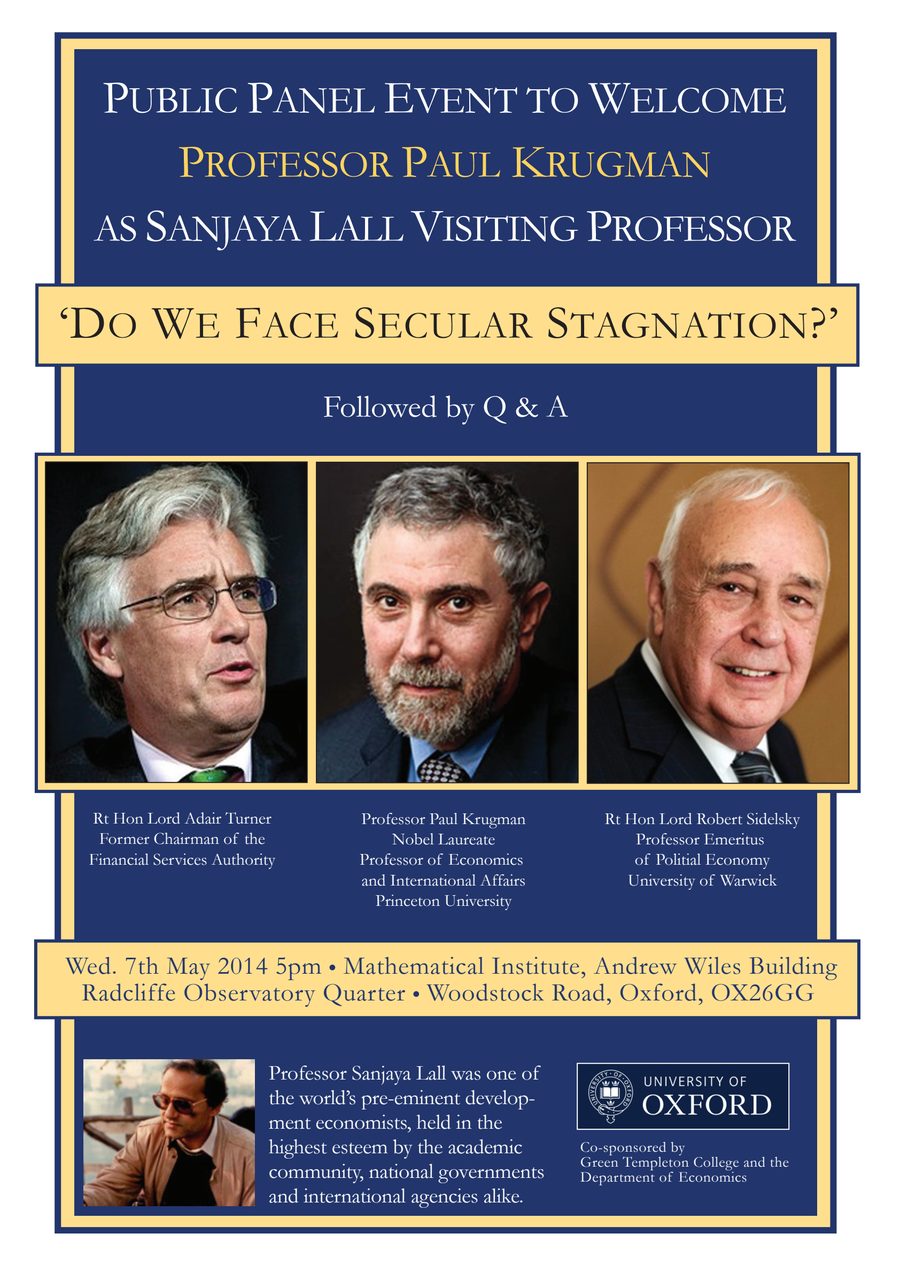
Professor of Economics and International Affairs, Princeton University
Krugman led a discussion on whether the world economy faced permanently depressed growth five years after the credit crunch.
Speakers The Rt Hon Lord Adair Turner (former Chairman, Financial Services Authority), Paul Krugman (Princeton, Nobel laureate), and The Rt Hon Lord Robert Skidelsky (Professor Emeritus of Political Economy, Warwick).
Venue Andrew Wiles Building, Mathematical Institute · 5.00pm. Co-sponsored by Green Templeton College and the Department of Economics
A further public lecture during Krugman's Trinity Term visit.
Speakers Paul Krugman (Princeton University)
Venue Gulbenkian Lecture Theatre, St Cross Building · 5.00pm. Organised by the Department of Economics with the Oxford Department of International Development
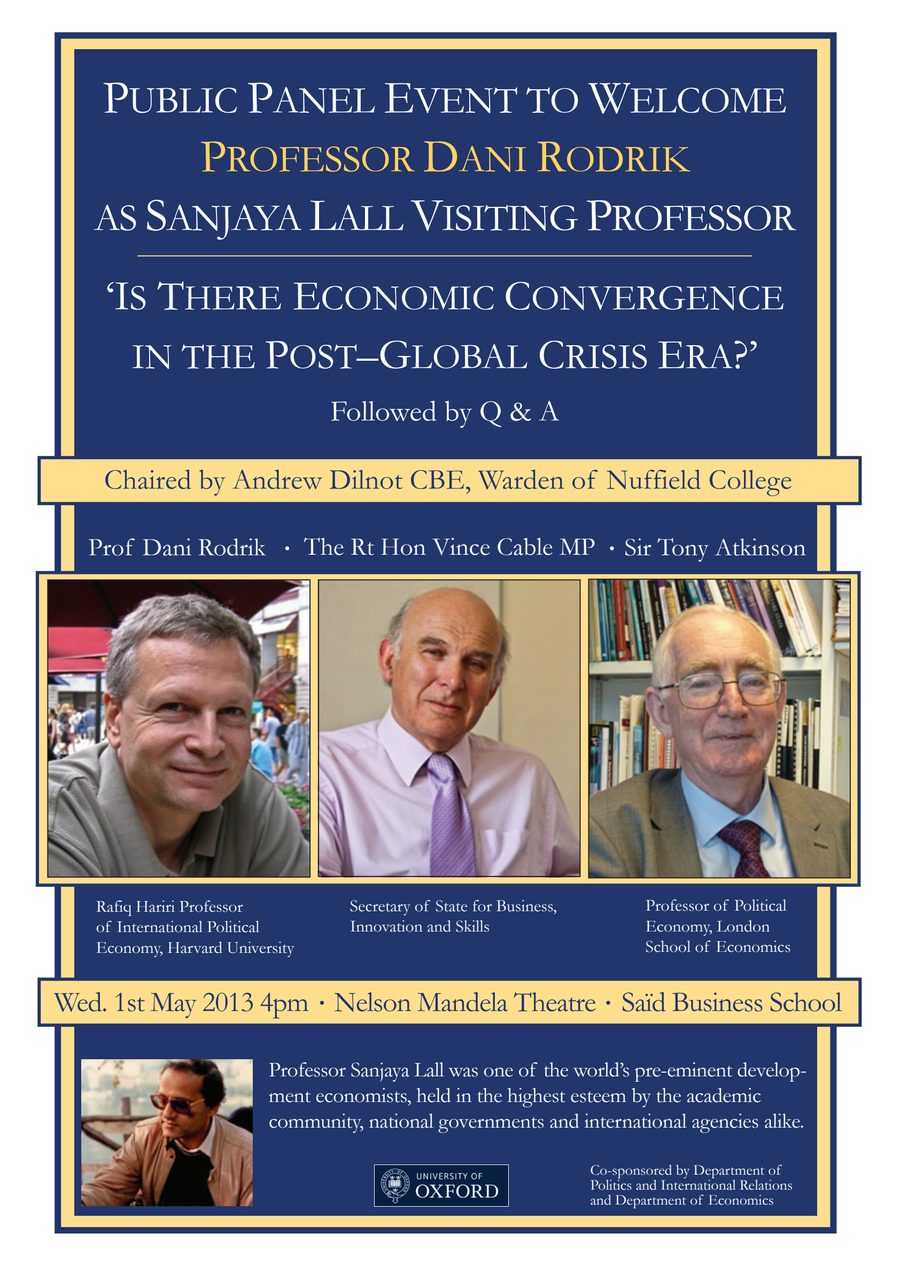
Rafiq Hariri Professor of International Political Economy, Harvard University
On whether developing economies were still catching up with rich ones after the financial crisis, and what industrial policy could do about it.
Speakers Professor Dani Rodrik (Harvard), The Rt Hon Vince Cable MP (then Secretary of State for Business, Innovation and Skills), and Sir Tony Atkinson (Professor of Political Economy, LSE). Chaired by Andrew Dilnot CBE, Warden of Nuffield College.
Venue Nelson Mandela Theatre, Saïd Business School · 4.00pm. Co-sponsored by the Department of Politics and International Relations and the Department of Economics
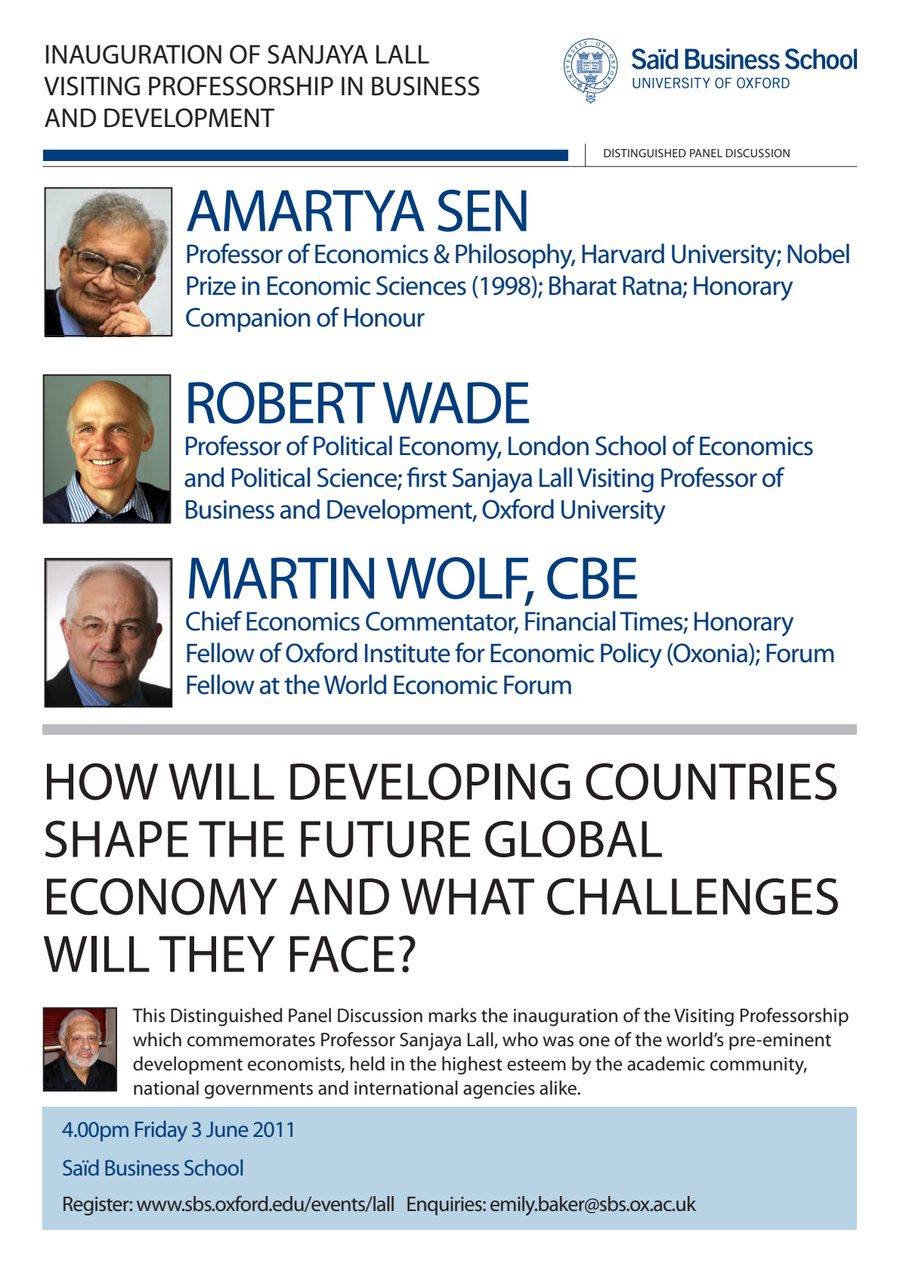
Professor of Political Economy and Development, London School of Economics
The Distinguished Panel Discussion marking the inauguration of the Visiting Professorship, opened by the Chancellor of the University.
Speakers Amartya Sen (Professor of Economics and Philosophy, Harvard, and Nobel laureate), Robert Wade (LSE), the first Sanjaya Lall Visiting Professor, and Martin Wolf CBE (Chief Economics Commentator, Financial Times). Opened by Lord Patten, Chancellor of the University.
Venue Saïd Business School · 4.00pm, Friday 3 June 2011
Recordings of several events are available through Oxford Podcasts. If you have posters, photographs, or recordings from other years, we would be glad to add them — contact ranjit.lall@politics.ox.ac.uk.
The Centre for Technology and Society hosts the Visiting Professorship, providing the academic home for each year's holder and organising the lecture, panel, and associated events.
The pairing is deliberate. The Professorship exists to bring scholars who work at the frontier of economics and development to Oxford; the Centre exists to understand how emerging technologies are redistributing economic opportunity and political power. Both are supported by the Sanjaya Lall Memorial Fund.
Far from simply picking industrial winners, Lall argued, the East Asian economies had deliberately created them — by building technological capability rather than waiting for it to arrive.